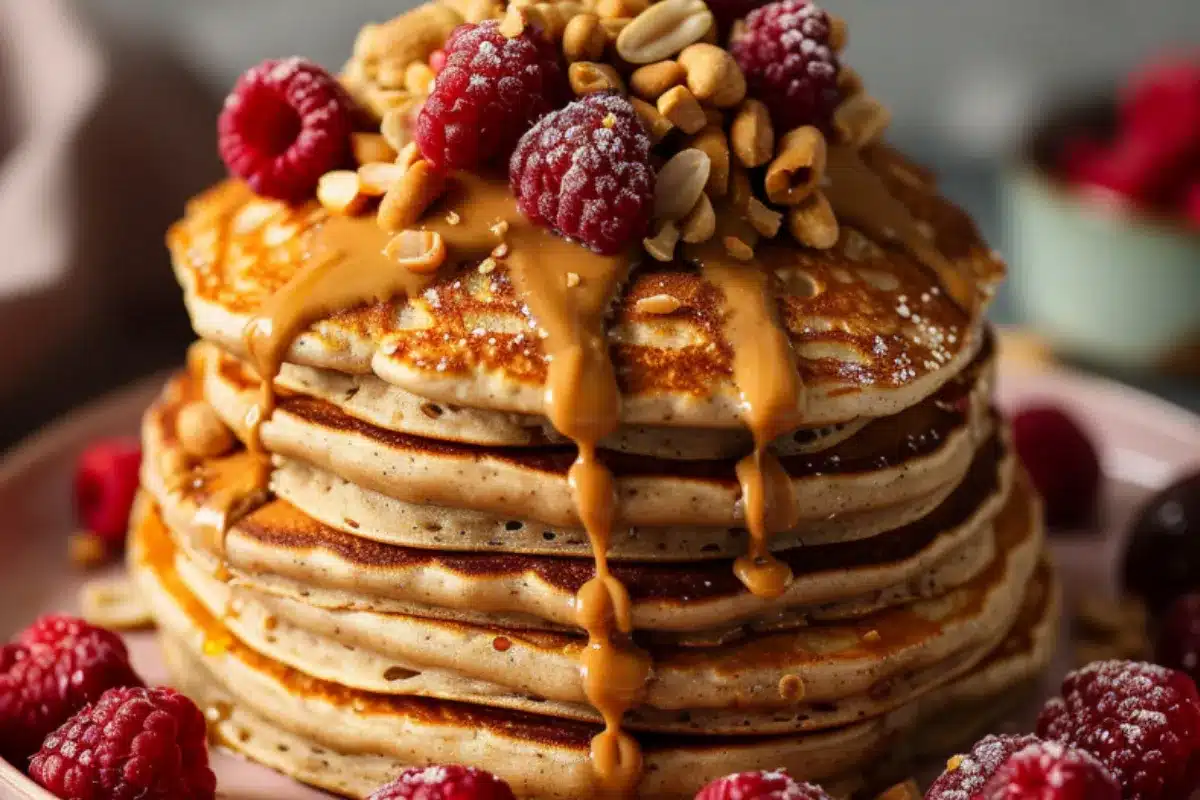
Do you ever miss the days when Saturday mornings meant a towering stack of fluffy, golden pancakes without having to read every single label? For many people cutting out gluten, breakfast can suddenly feel like a challenge. It is easy to feel left out when traditional comfort foods seem off-limits, or when gluten-free alternatives turn out dense, heavy, or dry.
You do not have to settle for flat, crumbly breakfast cakes anymore. This recipe brings back the joy of a cozy weekend breakfast. These pancakes are incredibly light, fluffy, and packed with rich flavor. By combining creamy peanut butter with the bright pop of fresh raspberries, you get a breakfast that feels like a special treat but is simple enough to make any day of the week.
Why You Will Love This Recipe
This recipe is a game-changer for gluten-free baking because it solves the biggest pancake problem: texture. Thanks to the natural fats and proteins in peanut butter, these pancakes stay moist and tender without needing gluten to hold them together. They have a rich, nutty base that balances perfectly with the tartness of fresh berries.
- Difficulty Level: Easy. If you can flip a pancake, you can make this recipe.
- Time Required: 10 minutes of prep time and 15 minutes of cooking time.
- Safety: This recipe is 100% gluten-free, making it entirely safe for individuals with celiac disease or non-celiac gluten sensitivity.
Essential Gluten-Free Ingredients
Choosing the right ingredients ensures your pancakes turn out perfectly light and safe from cross-contamination. Here is what you will need to gather:
- Gluten-Free Flour Blend (1 and 1/2 cups): Look for a 1-to-1 baking flour blend that already contains xanthan gum. Xanthan gum acts like gluten to keep the pancakes from crumbling. Brands like King Arthur or Bob’s Red Mill are excellent choices. Always check the package for a “Certified Gluten-Free” label.
- Creamy Peanut Butter (1/3 cup): Use a smooth, well-stirred peanut butter. If you use a natural brand where the oil separates, mix it thoroughly before measuring so your batter stays consistent.
- Fresh Raspberries (1 cup): Gently wash and completely dry your raspberries. You will fold some into the batter and use the rest for topping.
- Baking Powder (2 teaspoons): This gives the pancakes their rise and fluffiness. Check your label to ensure it is manufactured in a gluten-free facility.
- Sugar (2 tablespoons): A little granulated sugar or coconut sugar helps brown the pancakes and balances the peanut butter.
- Salt (1/4 teaspoon): A pinch of salt enhances the peanut and berry flavors.
- Milk (1 and 1/4 cups): Whole milk works beautifully, but you can use an unsweetened almond or oat milk if you prefer.
- Egg (1 large): The egg provides structure and lift to the batter.
- Melted Butter or Coconut Oil (2 tablespoons): This adds richness to the batter, plus a little extra for greasing the pan.
Dietary Adjustments and Variations
- Dairy-Free Option: Use almond milk or coconut milk instead of dairy milk, and use melted coconut oil instead of butter.
- Nut-Free Option: If you have a peanut allergy but still want this flavor profile, substitute the peanut butter with sunflower seed butter in the exact same measurement.
Step-by-Step Instructions
Follow these simple steps to prepare your Gluten-Free Peanut Butter Pancakes.
Step 1: Whisk the Dry Ingredients
In a large mixing bowl, combine 1 and 1/2 cups of gluten-free flour blend, 2 teaspoons of baking powder, 2 tablespoons of sugar, and 1/4 teaspoon of salt. Whisk the ingredients together thoroughly so the baking powder is evenly distributed.
Step 2: Mix the Wet Ingredients
In a separate medium bowl, whisk together 1 large egg, 1 and 1/4 cups of milk, and 2 tablespoons of melted butter or oil. Add 1/3 cup of creamy peanut butter and whisk vigorously until the peanut butter completely dissolves into the liquid and the mixture is smooth.
Step 3: Combine the Batter
Pour the wet ingredients into the dry ingredients. Stir gently with a spatula just until the flour disappears. Gluten-free batter behaves differently than wheat batter; it will look a bit thicker. Do not overmix, or the pancakes will lose their fluffiness. Gently fold in 1/2 cup of the fresh raspberries, leaving the rest for serving.
Step 4: Rest the Batter
Let the batter sit on the counter for 5 minutes. This is a crucial step for gluten-free baking. It allows the rice flours in the blend to absorb the liquid, eliminating any gritty texture.
Step 5: Heat the Skillet
Heat a large non-stick skillet or griddle over medium heat. Add a tiny pat of butter or oil to coat the surface. To prevent cross-contamination, ensure your skillet and spatula have been thoroughly washed if they are normally used for gluten-containing foods.
Step 6: Cook the Pancakes
Scoop 1/4 cup of batter onto the hot skillet for each pancake. Cook for about 3 to 4 minutes. You will see a few small bubbles form on top, and the edges will look set and matte.
Step 7: Flip and Finish
Carefully slide your spatula under the pancake and flip it over. Cook the second side for another 2 to 3 minutes until it is golden brown and cooked through in the center. Repeat with the remaining batter, greasing the pan lightly between batches.
Serving Suggestions
Presentation makes breakfast feel like an event. To serve these pancakes beautifully, stack them high on a warm plate.
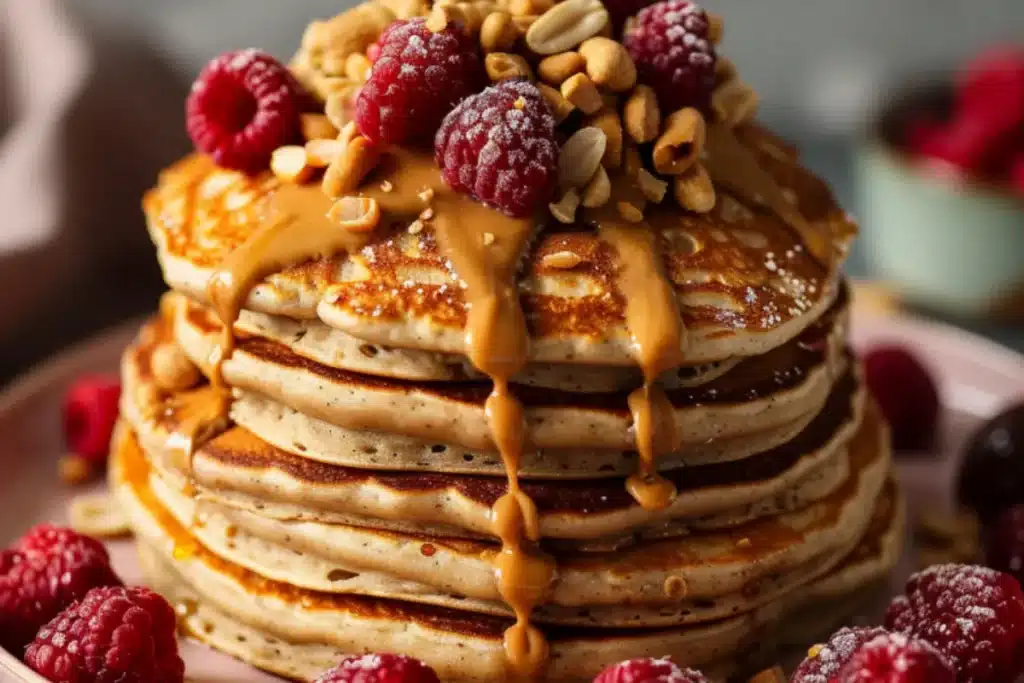
Warm up a couple of tablespoons of creamy peanut butter in the microwave for 15 seconds until it is thin and pourable. Drizzle the warm peanut butter over the top of the stack, letting it cascade down the sides. Top the stack with your remaining fresh raspberries and a handful of crushed, roasted peanuts for a delightful crunchy contrast.
If you want a full breakfast spread, these pancakes pair wonderfully with a side of crispy bacon or turkey sausage. For a beverage, serve them alongside a hot cup of coffee or a cold glass of your favorite milk alternative.
Storage and Make-Ahead Tips
If you have leftovers, you can easily save them for busy mornings later in the week.
- Refrigerating: Allow the pancakes to cool completely on a wire rack. Place them in an airtight container with a piece of parchment paper between each pancake to prevent sticking. They will keep well in the refrigerator for up to 3 days.
- Freezing: These pancakes freeze beautifully. Place the cooled pancakes in a single layer on a baking sheet and freeze for 1 hour. Once solid, transfer them to a freezer-safe zip-top bag. They will stay fresh in the freezer for up to 2 months.
- Reheating: Skip the microwave if you want to preserve the texture. Instead, place frozen or refrigerated pancakes into a toaster on a medium setting. The toaster warms them through completely while restoring the slightly crisp exterior. Alternatively, reheat them on a baking sheet at 350 degrees Fahrenheit for 5 to 7 minutes.
Recipe Variations
- Add Extra Protein: Stir 1 tablespoon of chia seeds or flaxseeds into the dry ingredients, or replace 1/4 cup of the flour blend with your favorite certified gluten-free plain protein powder.
- Make it Vegan: Replace the dairy milk with soy or almond milk. Use melted coconut oil instead of butter. Replace the egg with a “flax egg” made by mixing 1 tablespoon of ground flaxseed with 3 tablespoons of water and letting it sit for 5 minutes until gelatinous.
- Turn it into Muffins: If you are on the go, spoon the pancake batter into a greased 12-cup muffin tin. Bake at 350 degrees Fahrenheit for 15 to 18 minutes until a toothpick inserted in the center comes out clean.
Conclusion
Eating gluten-free should never mean missing out on the textures and flavors you love. With the right ingredients and a few simple techniques, you can easily create a breakfast that everyone at your table will enjoy, regardless of their dietary needs.
Gather your ingredients this weekend and give these fluffy pancakes a try. If you make them, please leave a comment below to let us know how they turned out or share your favorite pancake toppings.
Frequently Asked Questions
Can I use oat flour or almond flour instead of a 1-to-1 gluten-free flour blend? You should not swap the flour blend for straight oat or almond flour in a 1:1 ratio. Almond flour lacks the starch needed to bind the pancakes, which will cause them to fall apart. Oat flour absorbs much more liquid and can make the pancakes heavy. For the best results, stick to a pre-made 1-to-1 gluten-free baking blend.
How do I keep my gluten-free pancakes from turning out gummy in the middle? Gummier textures usually happen if the pan is too hot or if the batter is too wet. If your pan is too hot, the outside of the pancake browns before the inside cooks through. Keep your heat at a steady medium or medium-low, and make sure to let the batter rest for 5 minutes before cooking so the flour fully hydrates.
Can I use frozen raspberries instead of fresh ones? Yes, you can use frozen raspberries. If you are adding them to the batter, do not thaw them first, or they will bleed color and turn your entire batter pink. Fold them in straight from the freezer right before cooking.
Are these pancakes healthy? These pancakes offer great nutritional benefits. Peanut butter provides healthy fats and a boost of plant-based protein, which helps keep you full for longer. Raspberries are rich in antioxidants and dietary fiber, making this a balanced breakfast choice that provides sustained energy.