Have you ever walked past a bakery and felt a little pang of sadness because you missed the smell of fresh, crusty bread? For those of us living gluten-free, finding a loaf that actually tastes good and does not crumble into dust the moment you touch it can feel like a lost cause. Many store-bought options are dry, expensive, or taste more like cardboard than food. But what if you could bake a loaf in your own kitchen that is just as soft, warm, and comforting as the bread you remember? This recipe for Gluten-Free Oatmeal Bread is designed to give you back that simple joy without any of the gluten.
PrintSoft & Hearty Gluten-Free Oatmeal Bread: The Ultimate No-Fail Loaf

This Soft & Hearty Gluten-Free Oatmeal Bread is a game-changer for anyone missing the smell of fresh, crusty bread. Unlike dry store-bought options, this homemade loaf is soft, warm, and comforting, holding up perfectly to slicing and toasting without crumbling.
- Prep Time: 15 minutes
- Cook Time: 50 minutes
- Total Time: 2 hours
- Yield: 1 loaf (approx. 12 slices)
- Category: Bread
- Method: Baking
- Cuisine: Gluten-Free
Ingredients
- 3 cups Certified Gluten-Free All-Purpose Flour Blend (with xanthan gum)
- 1 ½ cups Certified Gluten-Free Rolled Oats (divided)
- 1 packet (2 ¼ teaspoons) Active Dry Yeast
- 1 ½ cups Warm Water (approx. 110°F)
- 2 tablespoons Honey or Maple Syrup
- 3 tablespoons Melted Butter or Coconut Oil
- 2 Large Eggs (room temperature)
- 1 teaspoon Salt
- 1 teaspoon Apple Cider Vinegar
Instructions
- Heat the Oil and Brown the Sausage: Heat olive oil in a large skillet over medium heat. Add sausage slices in a single layer and cook until golden-brown, about 5 minutes. Remove and set aside.
- Create the Aromatic Base: In the same skillet, sauté onion and bell pepper for 3-4 minutes until softened. Add garlic and cook for 60 seconds more.
- Toast and Coat the Rice: Add uncooked rice to the skillet and stir constantly for 1-2 minutes to toast lightly.
- Combine All Ingredients: Return the sausage to the skillet. Add chicken broth, Cajun seasoning, honey, salt, and pepper. Stir well to combine and deglaze the pan.
- Simmer to Perfection: Bring to a simmer, reduce heat to low, cover, and cook undisturbed for 20 minutes, or until rice is tender and liquid is absorbed.
- Rest and Garnish: Let rest, covered, for 5 minutes. Fluff with a fork and garnish with fresh parsley before serving.
Notes
Ensure all ingredients are certified gluten-free to avoid cross-contamination. Most importantly, do not slice the bread while warm; cooling completely is essential for the structure. For a vegan version, use flax eggs and coconut oil.
This Gluten-Free Oatmeal Bread is a game-changer because it focuses on a “soft and hearty” texture that holds up to slicing and toasting. Unlike many gluten-free breads that require complex flour blends or advanced chemistry, this recipe is straightforward and accessible.
- Difficulty Level: Easy (Perfect for beginners)
- Total Time: Approximately 2 hours (including rising and baking)
- Dietary Safety: This recipe is 100% gluten-free and safe for those with Celiac disease or gluten sensitivities, provided you use certified ingredients.
Essential Gluten-Free Ingredients
To get the best results, it is important to use high-quality ingredients. Always look for the “Certified Gluten-Free” seal on your packaging to ensure there is no cross-contamination.
- 3 cups Certified Gluten-Free All-Purpose Flour Blend: Choose a blend that includes xanthan gum. If your blend does not have it, add 1 teaspoon of xanthan gum separately.
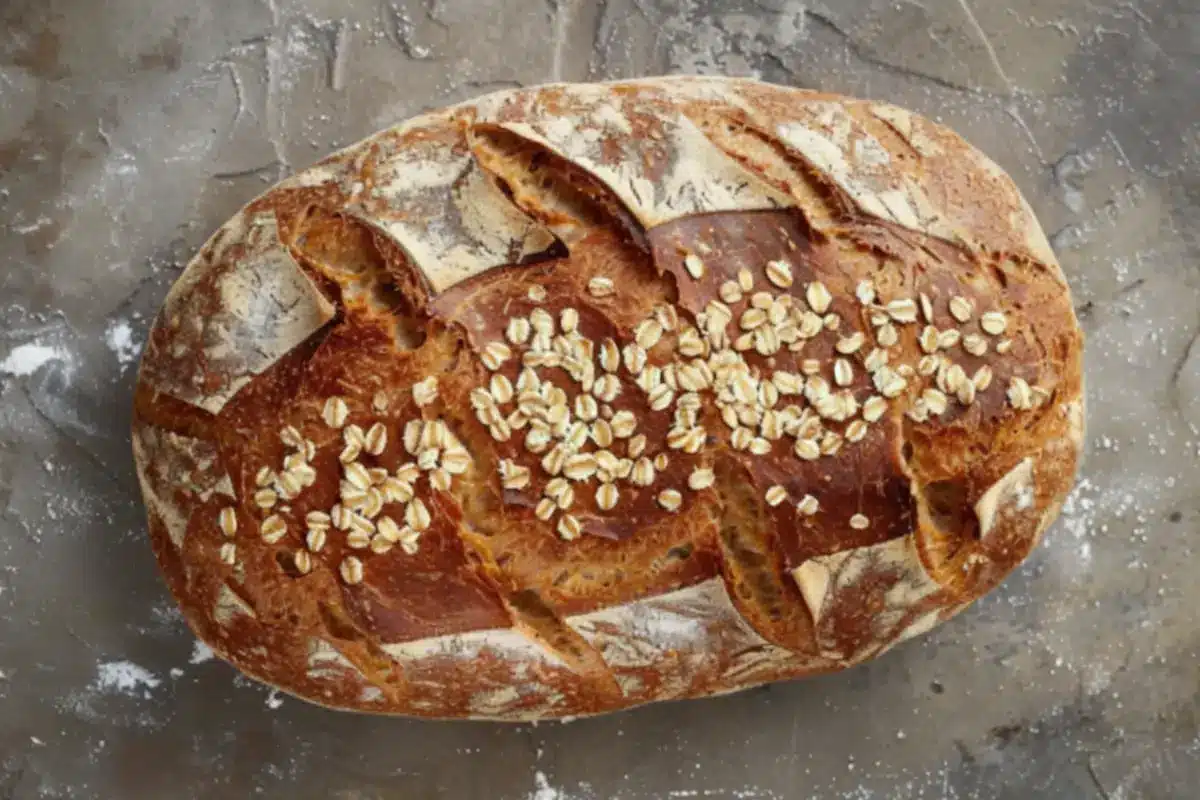
- 1 ½ cups Certified Gluten-Free Rolled Oats: These provide the “hearty” texture seen in Soft & Hearty Gluten-Free Oatmeal Bread.png.
- 1 packet (2 ¼ teaspoons) Active Dry Yeast: Make sure it is fresh and gluten-free.
- 1 ½ cups Warm Water: The water should be about 110 degrees Fahrenheit. If it is too hot, it will kill the yeast.
- 2 tablespoons Honey or Maple Syrup: This feeds the yeast and adds a hint of sweetness.
- 3 tablespoons Melted Butter or Coconut Oil: This keeps the bread soft.
- 2 Large Eggs: Room temperature eggs help the bread rise better.
- 1 teaspoon Salt: To balance the flavors.
- 1 teaspoon Apple Cider Vinegar: This helps with the rise and texture of gluten-free dough.
Variations & Add-ins:
- Vegan Option: Use a flax egg (2 tablespoons ground flax mixed with 6 tablespoons water) and coconut oil.
- Seeded Version: Add 2 tablespoons of sunflower seeds or chia seeds for extra crunch.
Step-by-Step Instructions
Baking gluten-free bread is different from baking wheat bread. You do not need to knead the dough because there is no gluten to develop. Instead, you want a thick, batter-like consistency.
- Bloom the Yeast: In a large bowl, combine 1 ½ cups warm water with 2 tablespoons honey and the yeast packet. Let it sit for 5 to 10 minutes until it becomes foamy.
- Mix Wet Ingredients: Whisk in the 2 eggs, 3 tablespoons melted butter (or oil), and 1 teaspoon apple cider vinegar into the yeast mixture.
- Combine Dry Ingredients: In a separate bowl, whisk together 3 cups gluten-free flour, 1 cup of the rolled oats (save the rest for the top), and 1 teaspoon salt.
- Combine: Slowly add the dry ingredients to the wet ingredients. Mix with a sturdy spoon or a stand mixer for about 3 minutes. The dough will be very sticky.
- First Rise: Transfer the dough into a greased 9×5 inch loaf pan. Smooth the top with a wet spatula. Sprinkle the remaining ½ cup of rolled oats on top and press them in lightly. Cover with a clean cloth and let it rise in a warm spot for 45 to 60 minutes, or until it has doubled in size.
- Bake: Preheat your oven to 375 degrees Fahrenheit. Bake for 45 to 50 minutes. If the top gets too dark too quickly, cover it loosely with foil.
- Cooling: This is the most important step! Let the bread cool in the pan for 10 minutes, then move it to a wire rack. You must let it cool completely before slicing, or the inside will be gummy.
Success Tip: To avoid cross-contamination, ensure your wooden spoons and bread pans have not been used with wheat flour, as gluten can hide in the pores of wood and scratches in metal.
Serving Suggestions
Once your bread is cool, you can slice it into thick, beautiful pieces.
- Breakfast: Toast a slice and spread it with salted butter or almond butter.
- Lunch: This bread is sturdy enough for a turkey and avocado sandwich.
- Dinner Side: Serve a warm slice alongside a bowl of gluten-free vegetable soup or a fresh garden salad.
- Sweet Treat: Drizzle a slice with honey and a sprinkle of cinnamon.
Storage & Make-Ahead Tips
Gluten-free bread dries out faster than regular bread, so proper storage is key.
- Room Temperature: Keep the bread in an airtight container or a sealed bag for up to 2 days.
- Freezing: This bread freezes beautifully. Slice the loaf first, then place parchment paper between the slices. Store in a freezer-safe bag for up to 3 months.
- Reheating: To get that “fresh from the oven” feel, toast the frozen slices directly in a toaster or heat them in a 350-degree oven for a few minutes.
Recipe Variations
- Cinnamon Raisin: Add 1 tablespoon of cinnamon and ½ cup of raisins to the dry ingredients.
- Savory Herb: Add 1 tablespoon of dried rosemary or thyme for a savory loaf that pairs perfectly with pasta.
- Protein Boost: Swap ¼ cup of the flour for ¼ cup of hemp seeds or almond meal.
Conclusion
Living gluten-free does not mean you have to give up the foods that make you feel at home. This Gluten-Free Oatmeal Bread is proof that with the right ingredients and a little patience, you can have a soft, delicious loaf that everyone in the family will love—gluten-free or not. You deserve to eat food that makes you feel good and tastes amazing. Please share your baking results or any fun twists you added to the recipe in the comments below.
FAQs Section
Can I use oat flour instead of rolled oats? You can, but the texture will be different. Rolled oats give the bread the “hearty” look and feel seen in Soft & Hearty Gluten-Free Oatmeal Bread.png. If you use oat flour, the bread will be more uniform and less rustic.
How do I keep my gluten-free bread from crumbling? Crumbling is usually caused by a lack of moisture or a missing binder. Ensure your flour blend has xanthan gum, and do not skip the eggs or the apple cider vinegar. Measuring your flour by weight rather than cups can also help ensure the bread isn’t too dry.
Is this bread healthy? Yes! This bread is a great source of fiber thanks to the oats. It is a much more nutrient-dense option than white gluten-free breads made primarily from refined starches.
Why didn’t my bread rise? Check your yeast to make sure it isn’t expired. Also, make sure your water isn’t too hot (which kills yeast) or too cold (which won’t activate it). A warm, draft-free spot is essential for the rising process.